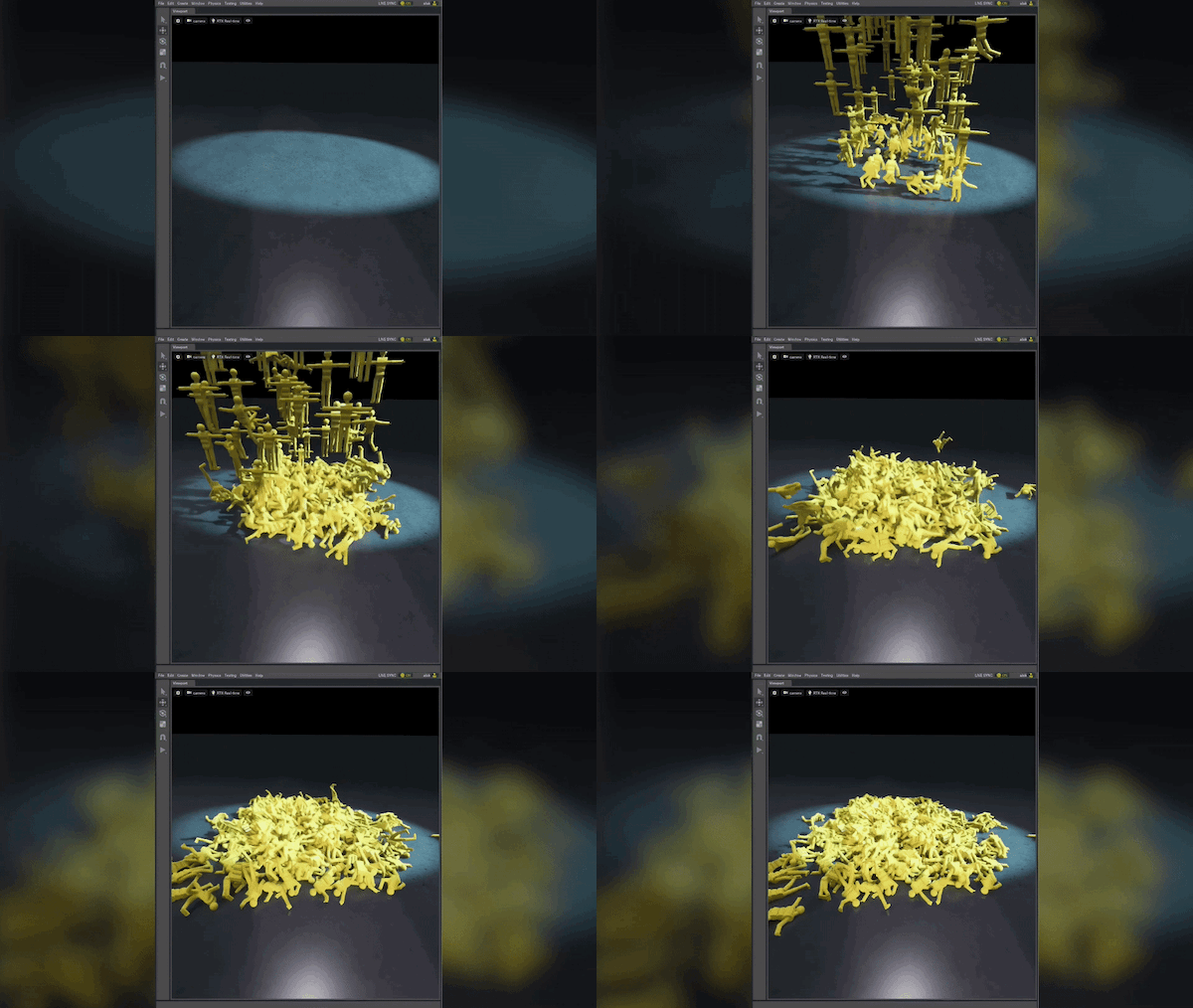
Custom schemas in Universal Scene Description, known as OpenUSD or USD, are pivotal for developers seeking to represent and encode sophisticated virtual worlds. By formalizing data models, schemas enable the interpretation of raw data by USD-compliant runtimes.
Whether underpinning physics simulations or expanding digital twins, custom schemas provide the foundation for creativity, fidelity, and innovation in virtual environments.
In the third installment of this OpenUSD series, I share what developers must know about custom schemas.
Specifically, we dive into:
- Data formalization: Custom schemas formalize data models, such as geometric meshes. These schemas populate the USD schema registry with canonical definitions.
- Data hierarchies: USD scenes, or stages, consist of prims—hierarchies of primitives—with each prim serving as a data container. Schemas formalize prim data, making them queryable and interpretable by USD-compliant runtimes.
- Data modeling compared to runtime behaviors: Schemas define data structure but not runtime functionality, highlighting the separation between the two aspects in USD development.
- Schema types: USD supports various schema types, including IsA (typed) schemas like UsdGeomMesh, and API schemas such as UsdPhysicsRigidBodyAPI to additionally annotate already-typed prims.
- Standardization process: Standardizing new schemas involves prototyping, formalization, internal reviews, whitepaper publication, and broad industry review, leading to adoption as a USD standard.
Custom schemas in USD open up numerous pathways for crafting more complex virtual worlds. OpenUSD includes core schemas like geometry and shading, with continuous development of custom schemas to broaden the digital landscape.
For the latest USD resources and tutorials, visit our OpenUSD resources page. Try the free RunUSD Validation Service to validate the compatibility of your OpenUSD assets and applications against a range of OpenUSD versions and configurations.
If you’re a developer, start building OpenUSD-based apps and tools on the Omniverse platform. Stay up to date on the platform by subscribing to the newsletter, and following NVIDIA Omniverse on Instagram, Medium, and Twitter. Check out our forums, Discord server, Twitch, and YouTube channels.