Researchers from Google, along with collaborators from academia, announced today they developed a deep learning-based system for identifying protein crystallization, achieving a 94 percent accuracy rate. Protein crystallization plays a vital role in the drug discovery process, helping determine the shape of cells.
The work has the potential to further the drug discovery process by making it easier to map the structures of proteins.
“Protein crystals are rare and difficult to find. Hundreds of experiments are typically run for each protein, and while the setup and imaging are mostly automated, finding individual protein crystals remains largely performed through visual inspection and thus prone to human error,” the researchers stated in a blog post. “Critically, missing these structures can result in lost opportunity for important biomedical discoveries for advancing the state of medicine.”
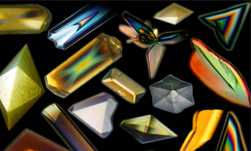
Using NVIDIA Tesla GPUs and the cuDNN-accelerated TensorFlow deep learning framework, the team trained their convolutional neural network on almost 500,000 images they gathered with the help of the MAchine Recognition of Crystallization Outcomes (MARCO) initiative. The neural network can visually recognize the crystals, which are small and hard to detect.
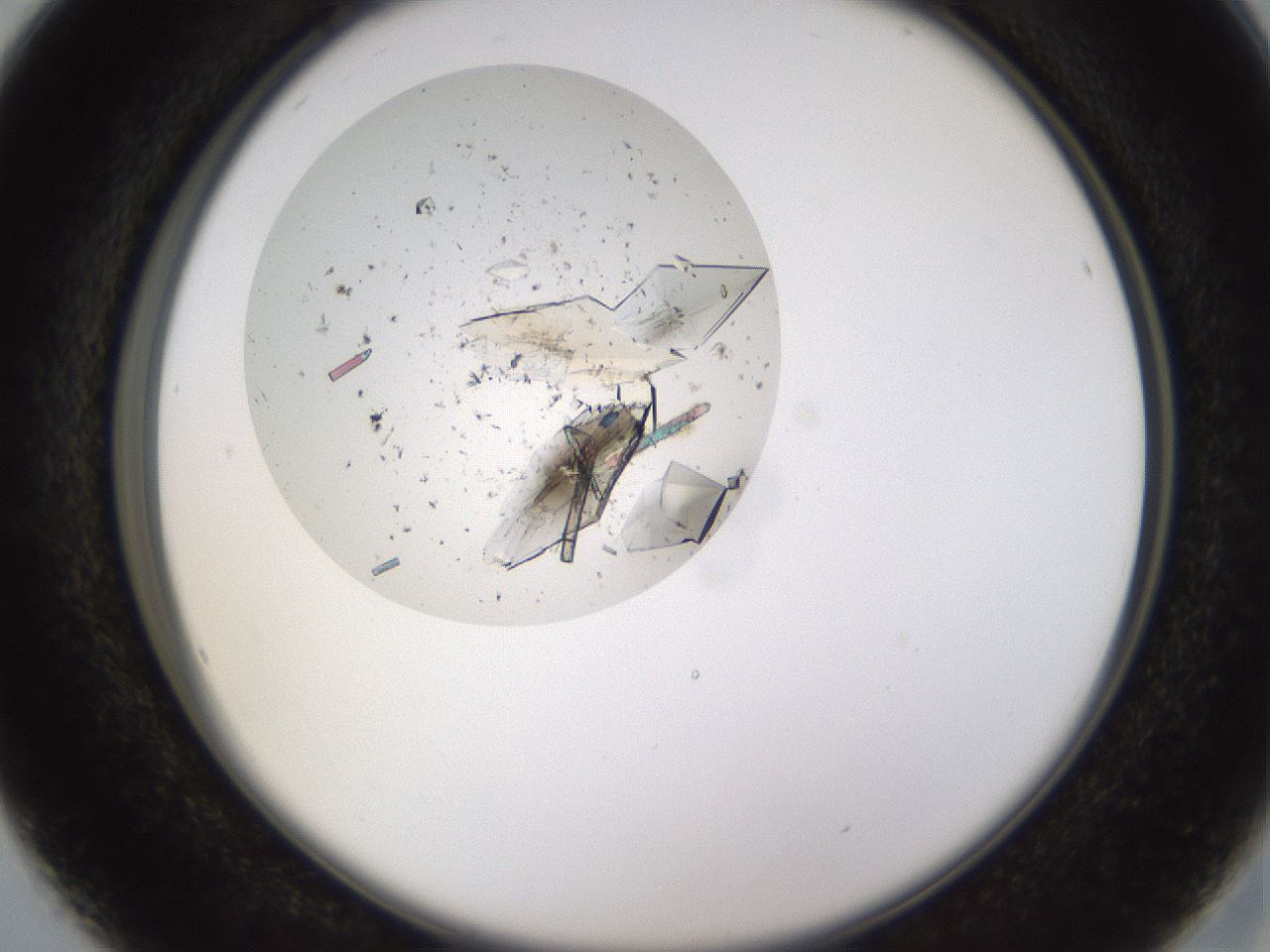
“The model achieves a level of precision and recall that makes its use practical in automated assessment pipelines,” the researchers said. “This work is a great example of the effectiveness of multi-institutional collaborations aimed at solving problems that require data in amounts and level of diversity that no single collaborator has access to.”
The researchers have made their work open-sourced and available on GitHub.
Read more>
AI Helps Automate the Drug Discovery Process
Jul 13, 2018
Discuss (0)
AI-Generated Summary
- Researchers from Google and academic collaborators developed a deep learning system that identifies protein crystallization with 94 percent accuracy.
- The team trained a convolutional neural network on nearly 500,000 images from the MARCO initiative using NVIDIA Tesla GPUs and the cuDNN-accelerated TensorFlow framework.
- The model achieves precision and recall levels suitable for automated assessment pipelines, and the work has been open-sourced on GitHub.
Next Steps
- Read the Google AI blog post for details on the collaboration and methodology.
- Review the Duke research blog article for additional context on the project.
Powered by NVIDIA Nemotron. AI-generated content may summarize information incompletely. Verify important information. Learn more
About the Authors