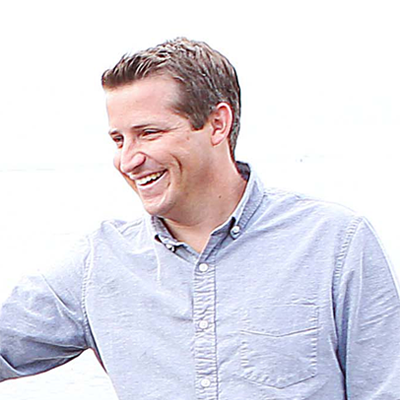
Chiyuan Zhang, PhD student at MIT talks about his joint project with Shell using GPUs and deep learning to automatically detect subsurface faults from seismic traces for oil and gas exploration.
Using a Tesla K80 GPU, CUDA, cuBLAS and the cuDNN-accelerated Mocha.jl deep learning framework, the researchers were able to speed-up up their experiments nearly 40% over their CPU-only solution.
To learn more, watch Chiyuan’s presentation at the 2016 GPU Technology Conference.
Share your GPU-accelerated science with us at http://nvda.ly/Vpjxr and with the world on #ShareYourScience.
Watch more scientists and researchers share how accelerated computing is benefiting their work at http://nvda.ly/X7WpH
Share Your Science: Using Deep Learning to Automatically Detect Geophysical Features
Aug 19, 2016
Discuss (0)
AI-Generated Summary
- Chiyuan Zhang, a PhD student at MIT, collaborated with Shell to apply deep learning for automatically detecting subsurface faults from seismic traces in oil and gas exploration.
- The researchers used a Tesla K80 GPU, CUDA, cuBLAS, and the cuDNN-accelerated Mocha.jl framework to accelerate their experiments.
- The GPU-accelerated approach achieved nearly 40% faster experiment speeds compared to a CPU-only solution.
Next Steps
- Watch Chiyuan's presentation from the 2016 GPU Technology Conference for more details.
- Share your GPU-accelerated science with NVIDIA and the community.
- Watch more researchers share how accelerated computing benefits their work.
Powered by NVIDIA Nemotron. AI-generated content may summarize information incompletely. Verify important information. Learn more
About the Authors