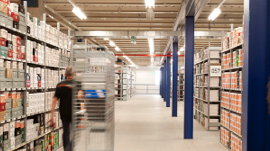
With thousands of orders placed every hour and each order assigned to a pick list, Europe’s leading online fashion retailer Zalando is using GPU-accelerated deep learning to identify the shortest route possible to products in their 1.3 million-square-foot distribution center.
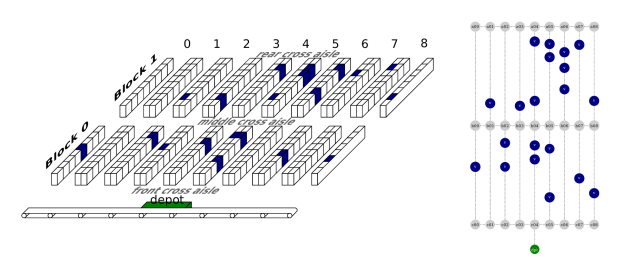
Calvin Seward, a Data Scientist focused on warehouse logistics, shares how his team is using the Caffe deep learning framework and Tesla K80 GPUs to train their deep neural network to greatly accelerate a processing bottleneck, which in turn enabled the company to more efficiently split work between workers.
Read more on Parallel Forall >>
AI-Generated Summary
- Zalando uses GPU-accelerated deep learning to identify the shortest route possible to products in their 1.3 million-square-foot distribution center.
- Data Scientist Calvin Seward and his team apply the Caffe deep learning framework and Tesla K80 GPUs to train a deep neural network that accelerates a processing bottleneck.
- The acceleration enables the company to more efficiently split work between warehouse workers.
Next Step
- Read more on Parallel Forall for additional details.
Powered by NVIDIA Nemotron. AI-generated content may summarize information incompletely. Verify important information. Learn more
About the Authors