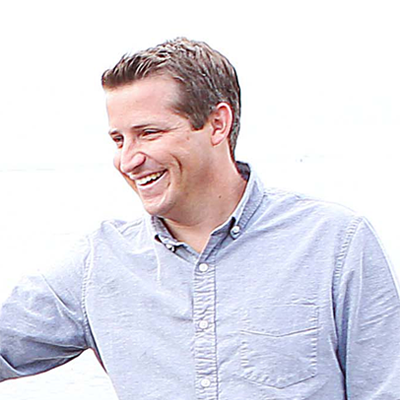
Adam McLaughlin, PhD student at Georgia Tech shares how he is using NVIDIA Tesla GPUs for his research on Betweenness Centrality – a graph analytics algorithm that tracks the most important vertices within a network. This can be applied to a broad range of applications, such as finding the head of a crime ring or determining the best location for a store within a city.
Using a cluster of GPUs for his research, Adam is able to scale his graphs to several million vertices which he says would most likely not be possible without accelerators.
Watch Adam’s talk on “Fast Execution of Simultaneous Breadth-First Searches on Sparse Graphs” from the NVIDIA GPU Technology Theater at SC15: Watch Now
Share your GPU-accelerated science with us at http://nvda.ly/Vpjxr and with the world on #ShareYourScience.
Watch more scientists and researchers share how accelerated computing is benefiting their work at http://nvda.ly/X7WpH
Share Your Science: Finding Interesting Statistics from Massive Datasets
Apr 27, 2016
Discuss (0)
AI-Generated Summary
- PhD student Adam McLaughlin uses NVIDIA Tesla GPUs for research on Betweenness Centrality, a graph analytics algorithm that identifies the most important vertices in a network.
- The algorithm applies to diverse problems such as locating the head of a crime ring or determining the optimal store location within a city.
- A GPU cluster enables scaling graphs to several million vertices, a scale McLaughlin says would likely not be possible without accelerators.
Next Steps
- Watch the SC15 GPU Technology Theater talk on simultaneous breadth-first searches to see the technical presentation.
- Share your own GPU-accelerated science at the submission page to contribute to the community.
- Watch more researchers discuss accelerated computing at the Share Your Science video collection for additional examples.
Powered by NVIDIA Nemotron. AI-generated content may summarize information incompletely. Verify important information. Learn more
About the Authors