CERN is upgrading the LHC (Large Hadron Collider), which is the world’s largest and most powerful particle accelerator ever built, to explore the new high-energy frontier. A researcher describes how his team is working to increase the luminosity of beam dynamics with GPUs. The most technically challenging aspects of the upgrade cannot be done by CERN alone and require collaboration and external expertise.
There are 7,000 scientists from over 60 countries working to extend the LHC discovery potential; the accelerator will need a major upgrade around 2020 to increase its luminosity by a factor of 10 beyond the original design value.
Ph.D. student Adrian Oeftiger attends EPFL (École Polytechnique Fédérale de Lausanne) in Switzerland which is one of the High Luminosity LHC beneficiaries – his research group is working to parallelize their algorithms to create software that will offer the possibility of new kinds of beam dynamics studies that have not been possible with the current technology.
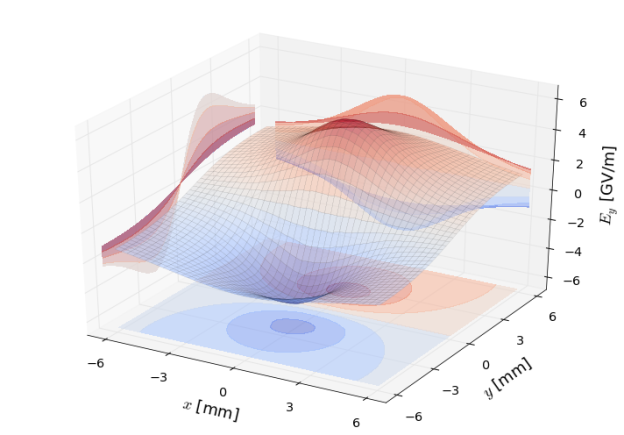
Learn how their research team is using Tesla GPUs, CUDA, cuSOLVER and other GPU-accelerated libraries to accelerate their code to explore the new high-energy frontier.
Read the interview on Parallel Forall >>
GPUs Accelerating Higher Energy Exploration at CERN
Sep 13, 2015
Discuss (0)
AI-Generated Summary
- CERN plans a major upgrade to the Large Hadron Collider around 2020 to increase luminosity by a factor of 10 beyond the original design value.
- Ph.D. student Adrian Oeftiger and his research group at EPFL are parallelizing algorithms to enable new beam dynamics studies previously impossible with current technology.
- The team uses Tesla GPUs, CUDA, cuSOLVER, and other GPU-accelerated libraries to accelerate their code for high-energy physics research.
Next Step
- Read the interview on Parallel Forall to learn more about the GPU-accelerated approach.
Powered by NVIDIA Nemotron. AI-generated content may summarize information incompletely. Verify important information. Learn more
About the Authors