Researchers from University of Massachusetts Amherst and Mount Holyoke College received a four-year grant from the National Science Foundation to analyze images and data on the chemical composition of rocks and dust from NASA’s Curiosity rover.
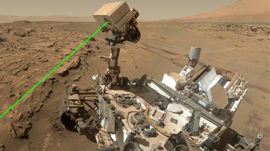
The rover has been exploring a crater on Mars since 2012 and sends back large amounts of data collected using a process called laser-induced breakdown spectroscopy. The process involves shining a laser on the rock, which heats the region to such a high temperature that it generates high frequency emissions that can be picked up by a small camera on the Curiosity rover and then sent back to Earth for analysis.
Using a cluster of NVIDIA GPUs, CUDA and cuDNN, the researchers will analyze the data to determine the elemental composition and minerals in the rock.
“I’ve been waiting 30 years for this and now it’s here,” said Sridhar Mahadevan, lead principal investigator at UMass Amherst’s College of Information and Computer Sciences. “We always thought artificial intelligence was a dream, but it’s happening. I see machine learning and cognitive computing as the future of big data science.”
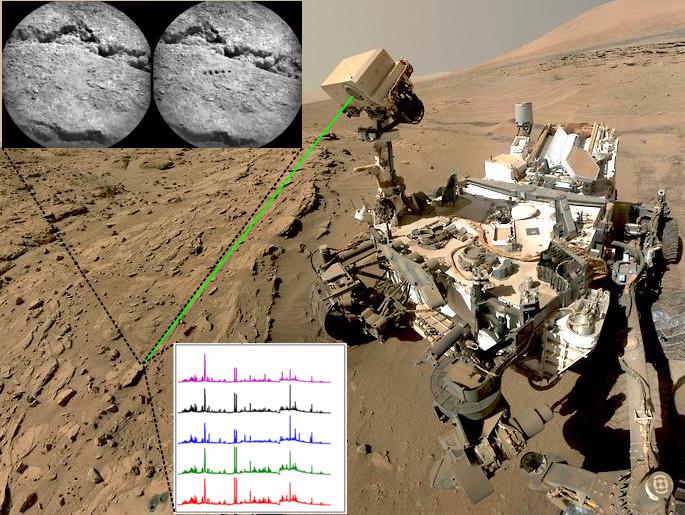
“We know that deep learning is now almost as good as humans at recognizing different objects,” says Mahadevan. “Our study will test the ability not at recognizing objects on Earth, but understanding planetary geochemistry from the Martian rock tests. The hope is that it will be [so] good at doing this new thing, that in four years we can show that deep learning can have a much better success rate than other previous methods of differentiation.”
Read more >
Analyzing Scientific Data from Mars with Deep Learning
Jun 07, 2016
Discuss (0)
AI-Generated Summary
- Researchers from University of Massachusetts Amherst and Mount Holyoke College received a four-year National Science Foundation grant to analyze Curiosity rover data using a cluster of NVIDIA GPUs, CUDA and cuDNN.
- The rover has explored a Martian crater since 2012, collecting data through laser-induced breakdown spectroscopy that heats rock to generate high-frequency emissions captured by an onboard camera.
- Lead principal investigator Sridhar Mahadevan said the study will test whether deep learning can understand planetary geochemistry from Martian rock tests with better success than previous methods.
Next Step
- Read the UMass news article for additional details on the project.
Powered by NVIDIA Nemotron. AI-generated content may summarize information incompletely. Verify important information. Learn more
About the Authors