Scientists from Australia and Denmark trained a deep learning system to classify and predict the ages of red giant stars.
“Automated methods do exist, however considerable effort is required for defining and acquiring features,” mentioned the researchers in their paper in reference to why they leveraged deep learning for their work over conventional methods. “Furthermore, these methods require relatively high signal-to-noise data.”
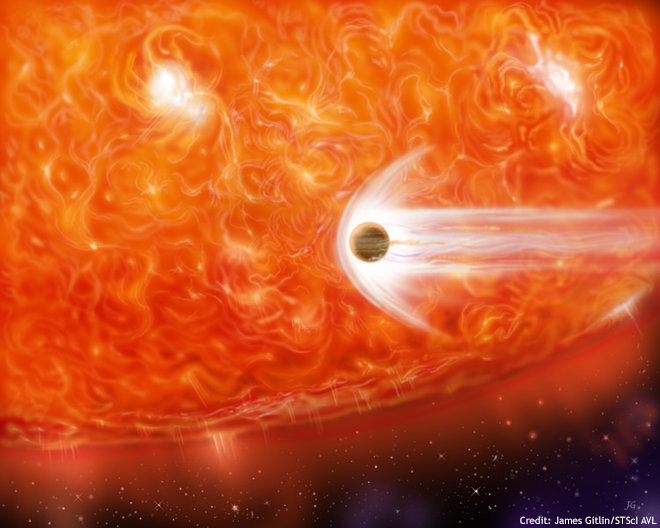
Using NVIDIA GPUs, Keras and cuDNN with the Theano deep learning framework, they trained their convolutional neural network on 5,000 Kepler red giants. Once trained, they were able to predict the ages of red giants with 99% accuracy, classify 5,379 which have never been analyzed in the past and corrected 500 that other researchers had incorrectly classified.
This research give scientists hope that more red giants will be located in the galaxy and the deep learning method will allow them to date red stars faster and with higher accuracy.
Read more >
AI-Generated Summary
- Researchers from Australia and Denmark trained a convolutional neural network on 5,000 Kepler red giants using NVIDIA GPUs, Keras, cuDNN and the Theano deep learning framework.
- The trained system predicted red giant ages with 99% accuracy, classified 5,379 previously unanalyzed stars and corrected 500 earlier misclassifications.
- Deep learning reduced the feature-engineering effort and high signal-to-noise requirements that limited conventional automated methods.
Next Step
- Read the Inverse article for additional details on the research.
Powered by NVIDIA Nemotron. AI-generated content may summarize information incompletely. Verify important information. Learn more
About the Authors