The Biowulf supercomputer at the National Institutes of Health (NIH) received an upgrade with the addition of 144 NVIDIA GPUs to help researchers discover new cures and save lives.
According to CSRA, the system integrator and service company responsible for the installation: “The second stage of computing power announced today will enable NIH researchers to make important advances in biomedical fields. This field of research is deeply dependent on computation, such as whole-genome analysis of bacteria, simulation of pandemic spread, and analysis of human brain MRIs. Results from these analyses may enable new treatments for diseases including cancer, diabetes, heart conditions, infectious disease, and mental health.”
The upgrade includes 72 GPU nodes, with two NVIDIA Tesla GPUs per node, which adds to the existing 2,372-node cluster. This brings the GPU contribution alone to over 400 teraflops, and the upgraded cluster to 1.6 peak petaflops.
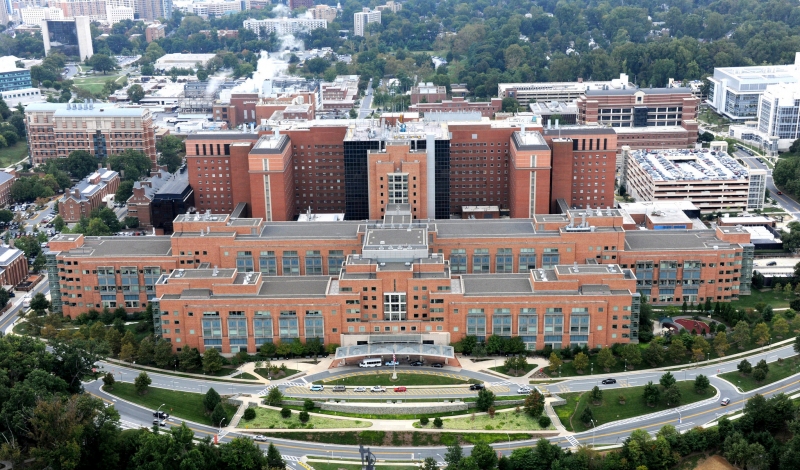
A large number of GPU-accelerated scientific applications are installed on the supercomputer, as well as an array of scientific databases.
Read more >
Major Upgrade to National Institutes of Health Supercomputer

Aug 03, 2017
Discuss (0)
AI-Generated Summary
- The Biowulf supercomputer at the National Institutes of Health received an upgrade adding 144 NVIDIA Tesla GPUs across 72 GPU nodes to accelerate biomedical research.
- The GPU contribution alone delivers over 400 teraflops, bringing the upgraded cluster to 1.6 peak petaflops.
- Researchers use the system for whole-genome analysis of bacteria, pandemic spread simulation, and human brain MRI analysis to advance treatments for cancer, diabetes, heart conditions, infectious disease, and mental health.
- A large number of GPU-accelerated scientific applications and scientific databases are installed on the supercomputer.
Next Step
- Read the TOP500 news article for additional details on the upgrade.
Powered by NVIDIA Nemotron. AI-generated content may summarize information incompletely. Verify important information. Learn more
About the Authors