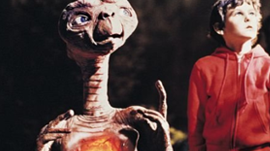
Researchers from Karlsruhe Institute of Tech, MIT and University of Toronto published MovieQA, a dataset that contains 7702 reasoning questions and answers from 294 movies. Their innovative dataset and accuracy metrics provide a well-defined challenge for question/answer machine learning algorithms.
The questions range from simpler ‘Who’ did ‘What’ to ‘Whom’ that can be solved by computer vision alone, to ‘Why’ and ‘How’ something happened in the movie, questions that can only be solved by exploiting both the visual information and dialogs.
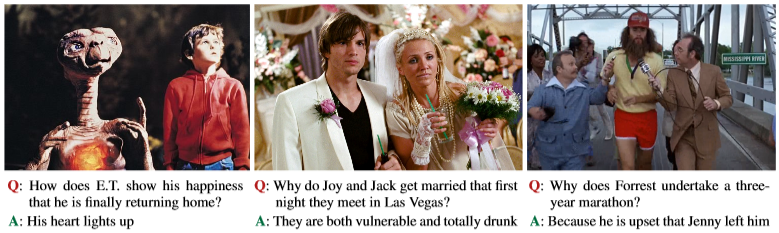
MovieQA is unique in that it contains multiple sources of information – full-length movies, plot synopses, subtitles, scripts and DVS (a service that narrates moves scenes to the visually impaired).
With the need to scale to large vocabulary data sets, they relied on a TITAN Black GPU for their overwhelming amount of training data.
In early 2016, the researchers plan to create an online benchmark that will have 15,000 questions and 75,000 answers which will encourage other to contribute.
Read the research paper >>
AI-Generated Summary
- Researchers from Karlsruhe Institute of Tech, MIT and University of Toronto published MovieQA, a dataset containing 7,702 reasoning questions and answers drawn from 294 movies.
- The questions span from basic "Who did What to Whom" queries solvable by computer vision alone to "Why" and "How" questions that require combining visual information with dialog semantics.
- MovieQA uniquely incorporates multiple information sources including full-length movies, plot synopses, subtitles, scripts and DVS narration for the visually impaired.
- The team relied on a TITAN Black GPU to handle the large vocabulary training data required for the dataset.
Next Steps
- Read the research paper to learn more about the MovieQA dataset and benchmark.
Powered by NVIDIA Nemotron. AI-generated content may summarize information incompletely. Verify important information. Learn more
About the Authors