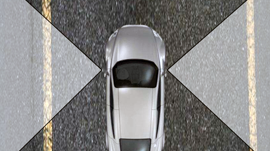
Researchers from the recently expanded Ford Research and Innovation Center in Palo Alto, California developed a new sub-centimeter accurate approach to estimate a moving vehicle’s position within a lane in real-time. To achieve this level of precision the researchers trained a deep neural network, aptly named DeepLanes, to process input images from two laterally-mounted down-facing cameras – each recording at an average 100 frames/s.
The team trained their neural network on an NVIDIA DIGITS DevBox with the cuDNN-accelerated Caffe deep learning framework.
“Our unified framework approach is a simple, end-to-end solution that does not depend on tedious pre-processing, post-processing or hand-crafted features,” says the team of researchers. But it was only after a thorough evaluation of the results that they could proudly claim, “we are able to estimate the lane position in 99% of the cases with less than five pixel error”.
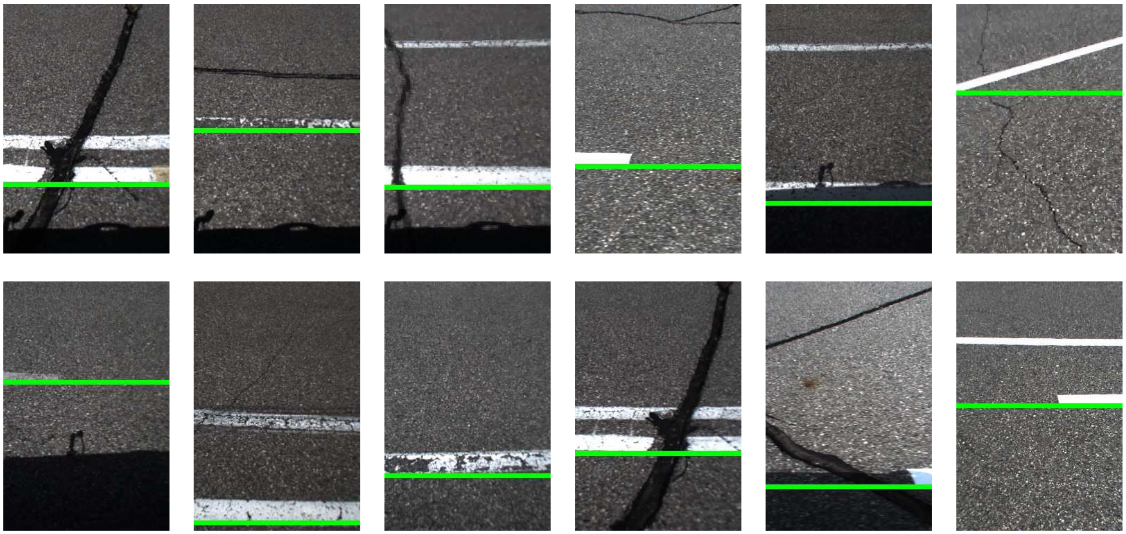
In the coming years the team expects their speedy and scalable DeepLanes technique can be applied to a variety of other automotive functions as well – anything from improved real-time navigation systems to fully automated driving features.
Read more >>
Ford Using Deep Learning for Lane Detection
Jun 28, 2016
Discuss (0)
AI-Generated Summary
- Ford researchers developed DeepLanes, a deep neural network that estimates a moving vehicle's lane position with sub-centimeter accuracy in real time.
- The network processes images from two laterally mounted down-facing cameras recording at an average 100 frames per second.
- Training was performed on an NVIDIA DIGITS DevBox using the cuDNN-accelerated Caffe deep learning framework.
- DeepLanes achieves less than five-pixel error in 99% of cases and detects lane markers in shadows as well as parallel, broken, and scattered markers.
Next Step
- Read the DeepLanes CVPR 2016 workshop paper for detailed methodology and results.
Powered by NVIDIA Nemotron. AI-generated content may summarize information incompletely. Verify important information. Learn more
About the Authors