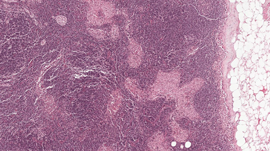
Google researchers developed a deep learning-based framework that automatically identifies tumors.
“What we’ve trained is just a little sliver of software that helps with one part of a very complex series of tasks,” said Lily Peng, the project manager behind Google’s work. “There will hopefully be more and more of these tools that help doctors [who] have to go through an enormous amount of information all the time.”
Using NVIDIA Pascal GPUs and TensorFlow deep learning framework, the researchers trained their models on images provided by the Radbound University Medical Center that were optimized for localization of breast cancer that has spread to lymph nodes adjacent to the breast. For full details, read their paper “Detecting Cancer Metasites on Gigapixel Pathology Images”.
Peng described to CNNTech how the human and the computer could work together to create better outcomes. Google’s artificial intelligence system excels at being very sensitive to potential cancer. It will flag things a human will miss. But it sometimes will falsely identify something as cancer, whereas a human pathologist is better at saying, “no, this isn’t cancer.”
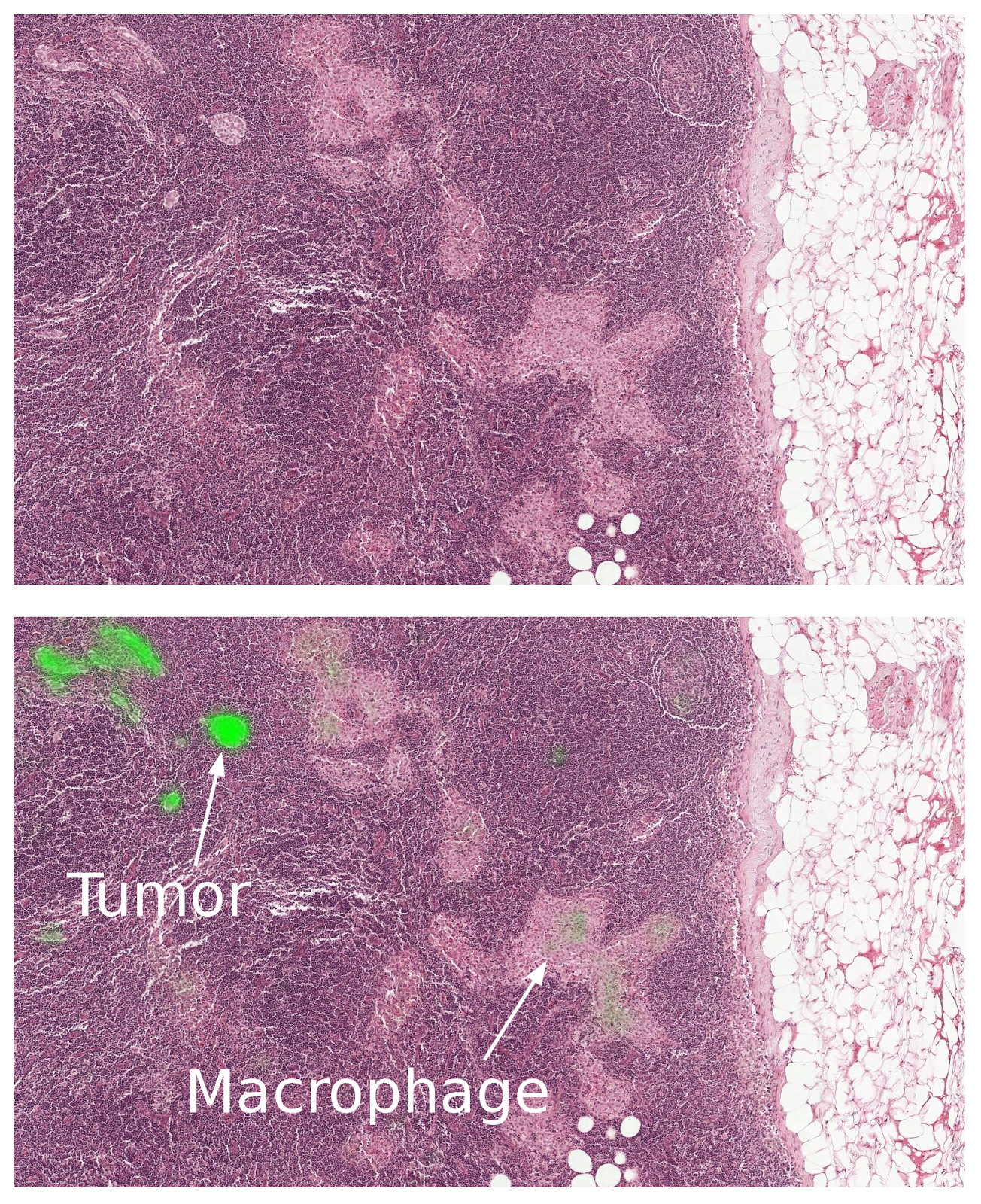
Their results showed that it was possible to train an AI model that either matched or exceeded the performance of a pathologist who had unlimited time to examine the slides.
Read more >
AI-Generated Summary
- Google researchers developed a deep learning-based framework that automatically identifies tumors in pathology images.
- Using NVIDIA Pascal GPUs and the TensorFlow deep learning framework, the team trained models on images from Radboud University Medical Center optimized for localizing breast cancer metastases in lymph nodes.
- The AI model matched or exceeded the performance of a pathologist with unlimited time to examine slides, successfully identifying tumor regions while avoiding confusion with benign macrophages.
Next Steps
- Read the Google Research blog post for more details on the project.
Powered by NVIDIA Nemotron. AI-generated content may summarize information incompletely. Verify important information. Learn more
About the Authors