NVIDIA Programmable Vision Accelerator SDK
The NVIDIA Programmable Vision Accelerator (PVA) Software Development Kit (SDK) lets you write, debug, and optimize applications targeting PVA. PVA is a programmable VLIW SIMD DSP accelerator included on NVIDIA DRIVE AGX™, Jetson AGX™, and Jetson NX™ platforms that is optimized for low-latency processing, determinism, and power efficiency. PVA programs can be executed concurrently with the CPU, GPU, and other accelerators as part of a heterogeneous compute pipeline, achieving high system performance and low power consumption for image processing, computer vision, and other sensor data processing tasks.
Key Features
Optimize Performance With PVA Offload
Leverage PVA to offload pre-processing tasks, freeing up the GPU to boost performance, meet latency budgets, and enhance power and thermal efficiency.
Develop Your Own Custom PVA Algorithms
The software development kit offers tools that let you build and deploy custom algorithms on PVA, accelerating AI applications with greater efficiency.
Accelerate Developing With Customizable PVA Solutions
Jumpstart development with PVA Solutions that provide source-code implementations of common algorithms—fully customizable for quick transition to production.
How the PVA SDK Works
PVA on NVIDIA Jetson and DRIVE AGX platforms offers a low-power solution to tackle compute and efficiency challenges in AI applications. It boosts system performance by offloading non-AI tasks—like feature extraction and object localization in multi-object tracking—to free up GPUs for AI workloads.
The PVA SDK provides runtime APIs, tools, and tutorials for the development and deployment of image processing, computer vision and other sensor processing applications. It provides a seamless build-to-deploy framework that enables efficient PVA code development, verification using an emulator, validation through debuggers and profiling utilities, and cross-compilation of code into a binary executable. The cuPVA runtime extends the NVIDIA CUDA™ programming model: PVA programs operate directly on CUDA device pointers without extra copies, and PVA programs can be submitted to CUDA streams, allowing users to assemble complex multi-engine pipelines with low overhead. With extensive documentation, beginner- to expert-level tutorials, and PVA Solutions, you can easily get started developing your own production-ready algorithms using the PVA SDK.
PVA Solutions provide operators, primitives, and samples powered by the PVA SDK. Source-code availability lets you use them as-is or customize them as needed. PVA Solutions are designed to accelerate application development across a diverse range of domains, including vision, lidar, and radar. Get access to PVA Solutions here.
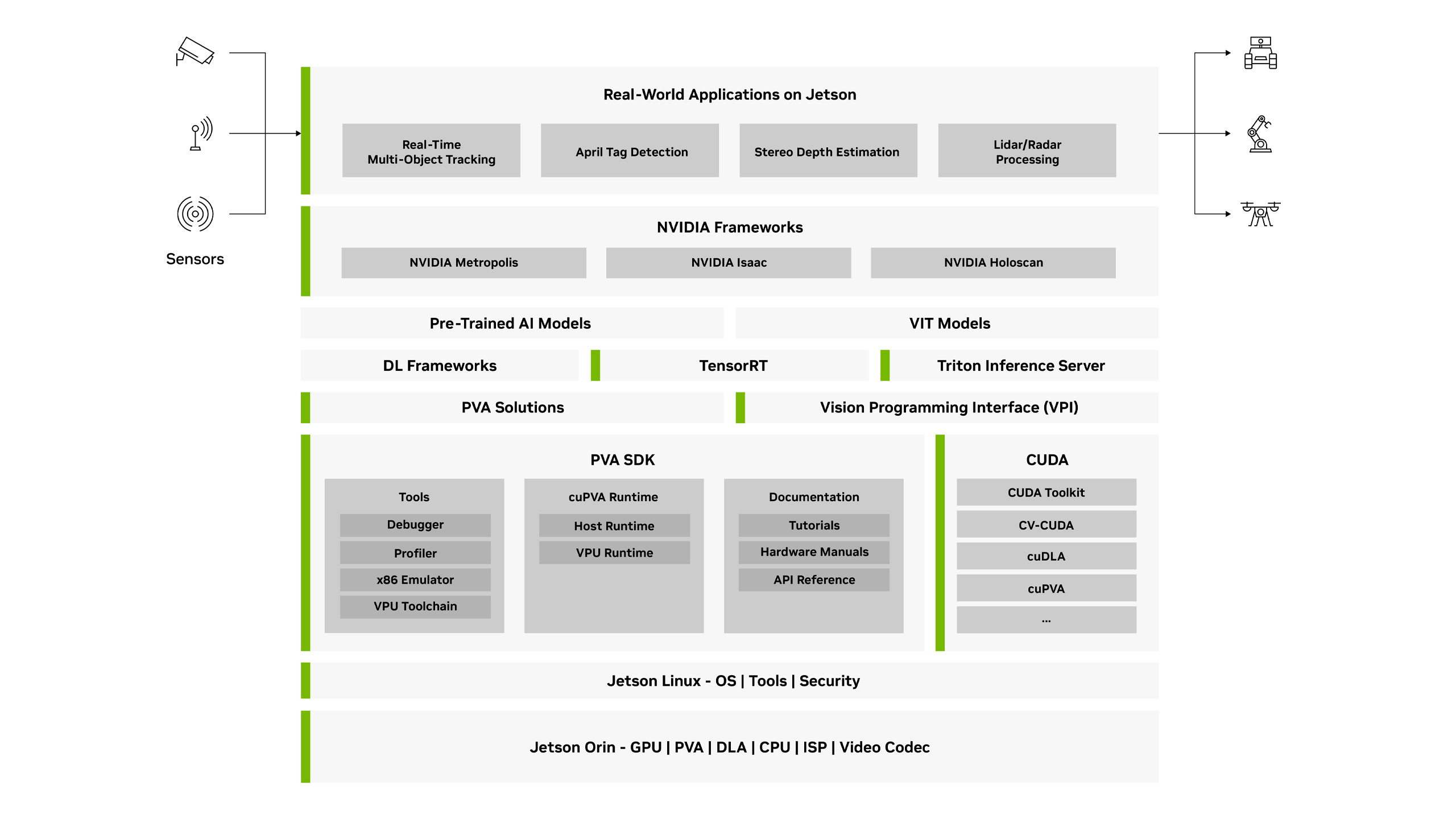
Multimodal sensor processing for physical AI
Learn more about centralized radar processing, an example of the diverse sensor processing workloads supported by PVA.
Real-World Applications
Learn how automotive manufacturers like NIO are optimizing their CV pipelines on the DRIVE AGX platform using PVA.
Boosting AI Performance on Jetson Orin
Learn how developers can use multiple compute engines like PVA, GPU, and DLA to boost system performance and efficiency on NVIDIA Jetson Orin™.
Jetson Partner Ecosystem for PVA
Access partners like RidgeRun to support your development effort on PVA.
Get Started With the PVA SDK
Use the right development and learning tools to start developing your algorithms on PVA.

Explore and Learn
Begin with exploring and learning the PVA hardware and SDK capabilities using the comprehensive documentation and step-by-step tutorials.

Develop Locally
Create PVA algorithms from scratch or start with source samples in PVA Solutions on your local machine using an PVA SDK EMU.

Debug, Optimize, Deploy
The PVA SDK contains a full set of tools for debugging and optimizing PVA applications. Step through target code and generate detailed performance profiling reports, which can be ingested by AI agents for iterative optimization.
Case Study: Real-Time Multi-Object Tracking on NVIDIA Jetson
Developers on Jetson implement state-of-the-art multi-object tracking pipelines containing processing algorithms with multiple streams using trackers like NvDCF in NVIDIA DeepStream. In these applications, it’s critical to achieve real-time performance without compromising accuracy within the energy and thermal constraints. These compute-demanding systems can use the PVA backend to free up the GPU for AI-specific and more critical tasks.
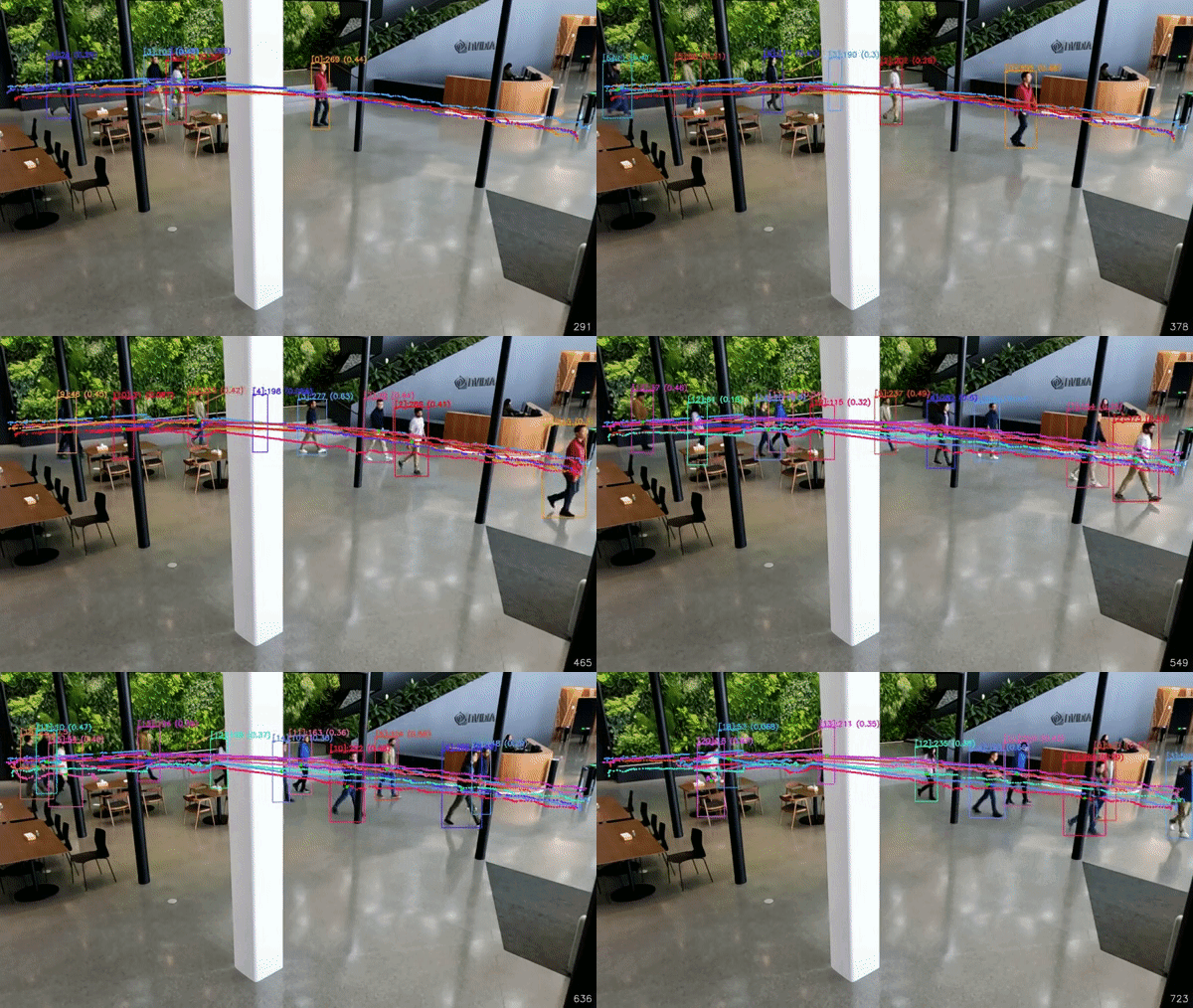
Multi-object tracking (using nvDCF) deployed on the Jetson platform.
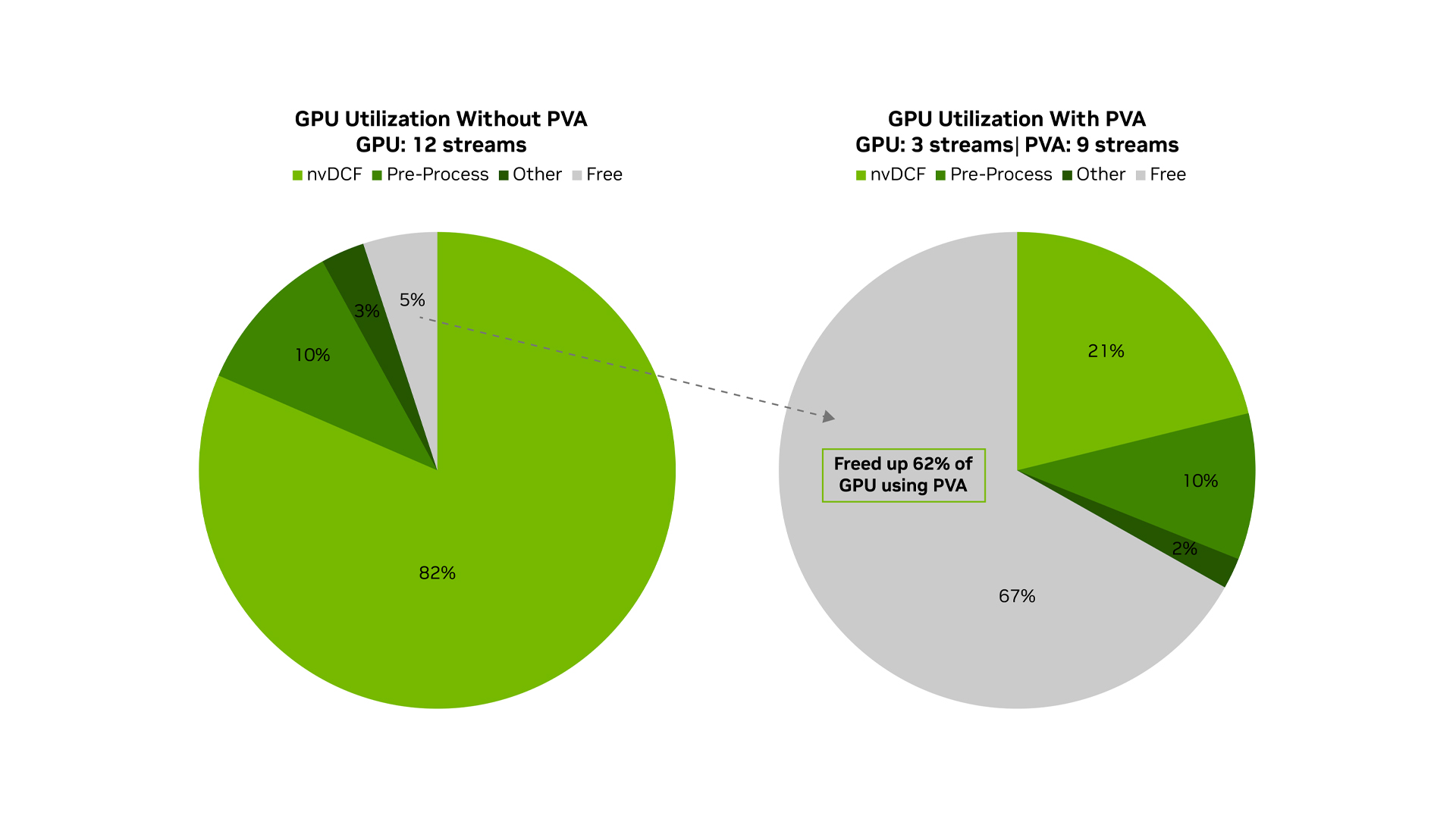 Leveraging PVA to offload an object-tracking algorithm and free up the GPU.