Ornithologists study every aspect of birds, including bird songs, flight patterns, physical appearance, and migration patterns – and to do so, they use acoustic sensors and cameras placed in remote areas.
Conservation Metrics, a California-based company, is using deep learning accelerated with NVIDIA GPUs to help capture the immense amounts of data that would be nearly impossible to analyze manually.
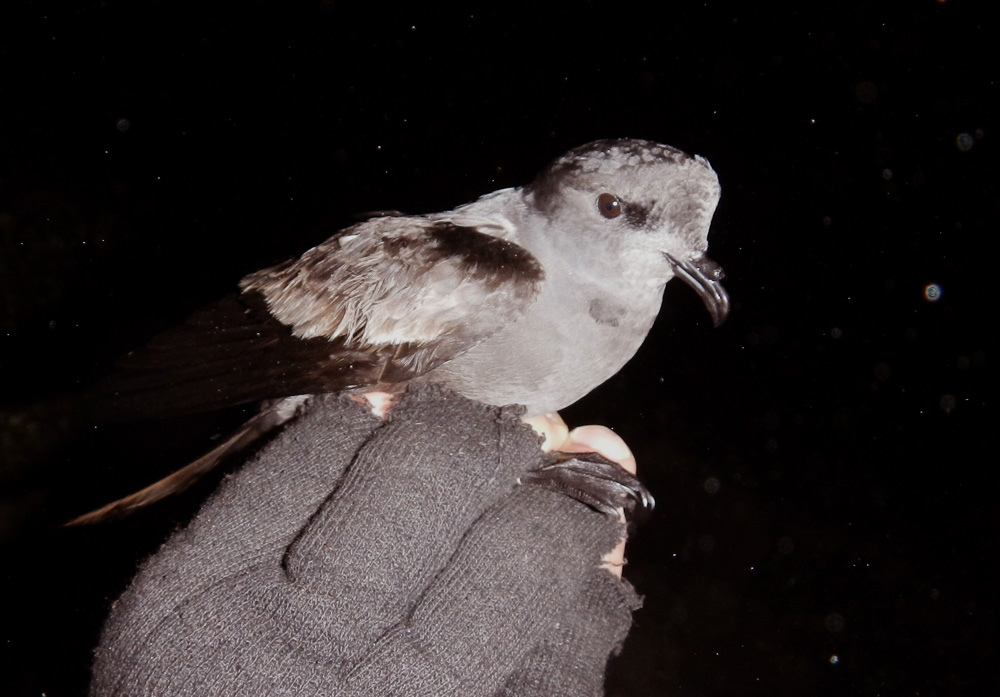
The company recently worked with Channel Islands National Park to monitor the elusive ashy storm–petrel – a tiny grey bird that lives in isolated environments, breeds in underground burrows and communicates only at night. With the help of new automated wildlife monitoring surveys and today’s technology, the researchers were able to find the first ashy storm-petrel nest on Anacapa Island, a small island within the Channel Islands National Park.
“With GPUs, we sped our work time by 22X. We can handle 90,000 hours of data, which would take a decade to listen to manually,” said Matthew McKown, CEO of Conservation Metrics, who describes the GeForce GTX TITAN X as his workhorse. “And using our algorithms, we can detect rare events, look for rare species, measure populations before and after conservation actions, and estimate population trajectories.”
Read more on the NVIDIA blog >>
Saving Endangered Birds with Deep Learning and GPUs

Jan 26, 2016
Discuss (0)
AI-Generated Summary
- Conservation Metrics applies deep learning accelerated with NVIDIA GPUs to process massive acoustic and visual datasets from remote wildlife sensors.
- The approach accelerated work by 22x, enabling analysis of 90,000 hours of data that would take a decade to review manually.
- Automated monitoring surveys helped researchers locate the first ashy storm-petrel nest on Anacapa Island within Channel Islands National Park.
Next Steps
- Read the NVIDIA blog for additional details on the project.
Powered by NVIDIA Nemotron. AI-generated content may summarize information incompletely. Verify important information. Learn more
About the Authors