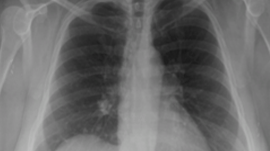
Ronald Summers, Senior Investigator at the National Institutes of Health (NIH) shares how they are trying to improve patient care by increasing the accuracy of radiologic diagnosis with advanced computer techniques.
His group is using deep learning and NVIDIA GPUs to assist physicians make a more accurate diagnosis by developing software that improves diagnosis, reduce the chance of errors, and help underserved patients that have limited access to advanced radiology services.
“With deep learning and GPU acceleration we’ve had a substantial improvement in the performance of all these computer programs to the point where the programs are getting pretty close to performing as well as the average physician,” says Summers.
Share your GPU-accelerated science with us at http://nvda.ws/2cpa2d4 and with the world on #ShareYourScience.
Watch more scientists and researchers share how accelerated computing is benefiting their work at http://nvda.ws/2dbscA7
Share Your Science: The Impact of Deep Learning on Radiology
Dec 13, 2016
Discuss (0)
AI-Generated Summary
- Ronald Summers, Senior Investigator at the National Institutes of Health, leads a group applying deep learning to improve radiologic diagnosis accuracy.
- The team uses NVIDIA GPUs to accelerate software that assists physicians, reduces diagnostic errors, and helps underserved patients with limited access to advanced radiology services.
- Summers reports that GPU-accelerated deep learning has brought program performance close to that of the average physician.
Next Steps
- Share your GPU-accelerated science with NVIDIA.
- Watch more researchers share how accelerated computing benefits their work.
Powered by NVIDIA Nemotron. AI-generated content may summarize information incompletely. Verify important information. Learn more
About the Authors