NVIDIA cuPQC
NVIDIA cuPQC is an SDK of GPU-optimized cryptographic math libraries for building both classical and next-generation high-performance cryptographic applications.
How cuPQC Works
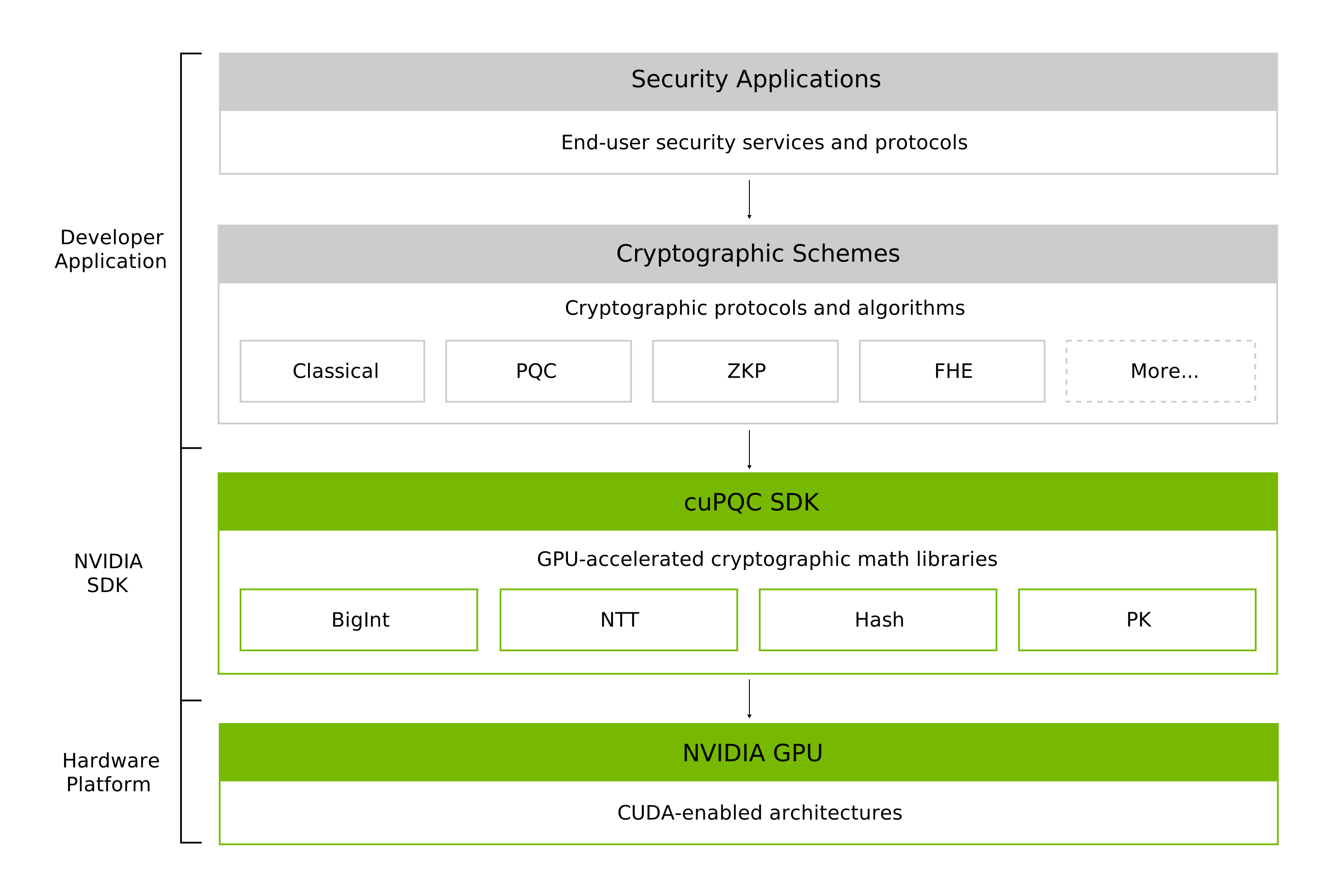
cuPQC is a GPU-accelerated SDK of cryptographic math primitives powering high-performance cryptographic applications. Developers can build and accelerate a broad range of cryptographic systems across NVIDIA GPU architectures, from classical public-key cryptography and post-quantum schemes to zero-knowledge proofs and fully homomorphic encryption. The libraries power the cryptographic building blocks that security applications and protocols rely on, from TLS handshakes and code signing to privacy-preserving authentication and encrypted communications.
cuPQC delivers a growing suite of modular primitives, including hashing, number theoretic transforms, and large integer operations, each optimized for GPU execution. Cryptographic workloads vary widely, from high-throughput batch operations to large-scale single computations, each requiring a different optimization approach. cuPQC addresses this through link-time optimization, automatically selecting the best GPU kernel for each configuration and workload type, delivering order-of-magnitude performance improvements over CPU implementations.
Key Features of cuPQC
Cryptographic Math Libraries
Provides direct access to a growing suite of GPU-optimized cryptographic math libraries for Finite Field Arithmetic over diverse domains, including Big Integer and Number Theoretic Transform. It also delivers essential cryptographic primitives such as Hash Functions, MerkleTrees, and Public-Key operations, giving developers everything they need to build both traditional and next-generation cryptographic applications with maximum control and flexibility.
Unified Modular Component APIs
Delivers modular component-level APIs that provide mathematical building blocks that work consistently across diverse cryptographic domains and applications. The same patterns and components can be used across whether building classical or next-generation cryptographic systems, reducing complexity and accelerating development.
Support for Emerging Cryptographic Technologies
Powers a growing range of emerging cryptographic technologies, from post-quantum cryptography to zero-knowledge proofs to fully homomorphic encryption and beyond. Domain-specific optimizations enable developers to efficiently build advanced cryptographic systems with specialized functions for each application.
Link-Time Optimization for Peak Performance
Applies link-time optimization to automatically select optimal GPU kernels for your specific configuration and parameters without manual tuning.
Broad GPU Platform Support
Delivers optimized performance across a broad range of NVIDIA GPU architectures—from NVIDIA Jetson™ edge devices to data center GPUs. Cryptographic solutions can be seamlessly deployed across any environment.
Exceptional Performance at Scale
Optimized for both low-latency single operations and high-throughput batch processing. Scales seamlessly from real-time responses to massive parallel workloads with GPU-accelerated performance.
Libraries
Composable GPU-accelerated cryptographic math libraries give developers direct access to high-performance primitives for building custom cryptographic solutions.
Available Libraries:
Big Integer
Number Theoretic Transform (NTT)
Hash Functions and Merkle Tree
Public Key
Big Integer
The cuPQC-BigInt library delivers GPU-accelerated large integer arithmetic for cryptographic workloads including reduction, inversion, multiplication, and exponentiation, optimized for the throughput demands of modern cryptographic standards.
These building blocks are fundamental to a broad range of cryptographic systems: classical public-key schemes such as RSA and elliptic curve cryptography, post-quantum schemes including isogeny-based cryptography, and advanced protocols such as zero-knowledge proofs, RSA accumulators, and verifiable delay functions, all of which are bottlenecked by large integer modular arithmetic at scale.
Number Theoretic Transform (NTT)
The cuPQC-NTT library delivers GPU-accelerated Number Theoretic Transform primitives for polynomial arithmetic in modular rings, offering forward and inverse NTT, element-wise operations in the transform domain, and the modular arithmetic needed for efficient polynomial multiplication.
Whether targeting large single NTT executions or high-throughput batch workloads, cuPQC-NTT delivers the polynomial multiplication performance required by lattice-based post-quantum cryptography, fully homomorphic encryption, zero-knowledge proof systems, as well as other workloads that rely on polynomial arithmetic.
Hash Functions and Merkle Tree
The cuPQC-Hash library delivers GPU-accelerated cryptographic hashing and Merkle tree operations, supporting data integrity verification, proofs of membership, hash-based signatures, and secure authentication protocols. It supports industry-standard algorithms alongside emerging cryptographic hash functions, providing flexibility for both traditional and next-generation security implementations.
cuPQC-Hash User GuideHash Functions
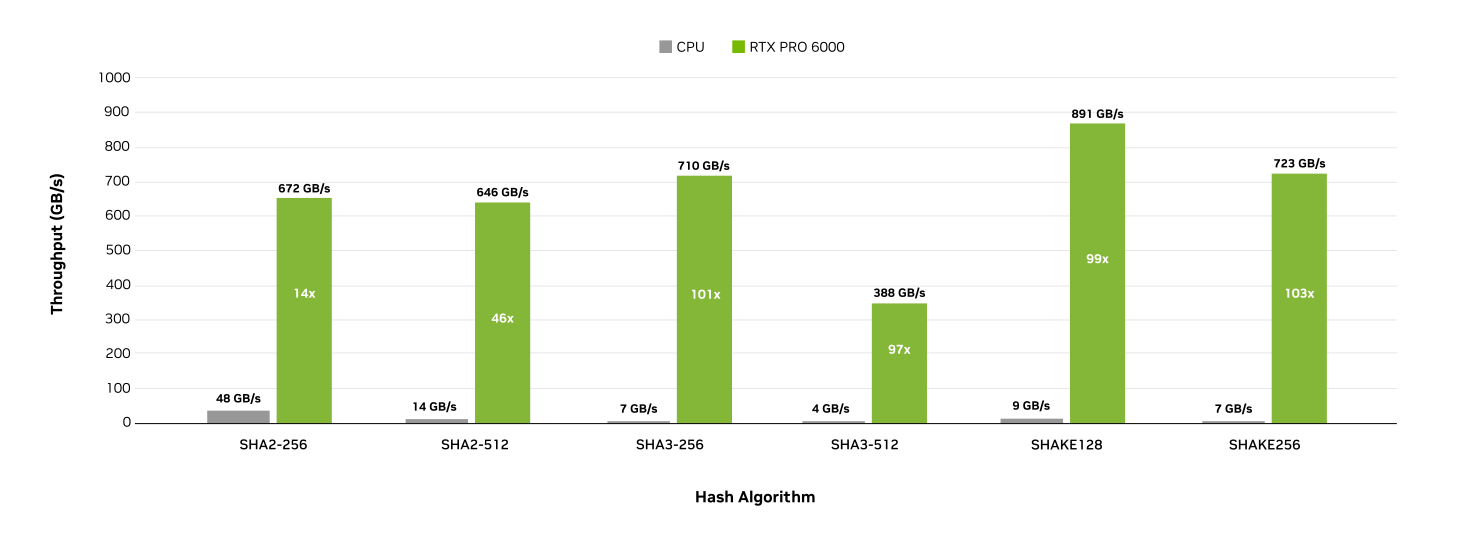
cuPQC-Hash supports GPU-accelerated implementations of SHA-2, SHA-3, SHAKE, and Poseidon 2 algorithm families, optimized for different security levels and performance requirements.
The hash library demonstrates significant performance gains, processing thousands of hash computations simultaneously, delivering throughput ranging from hundreds to thousands of GB/s, depending on the algorithm. These performance improvements make cuPQC-Hash ideal for applications requiring rapid cryptographic operations at scale.
Merkle Tree
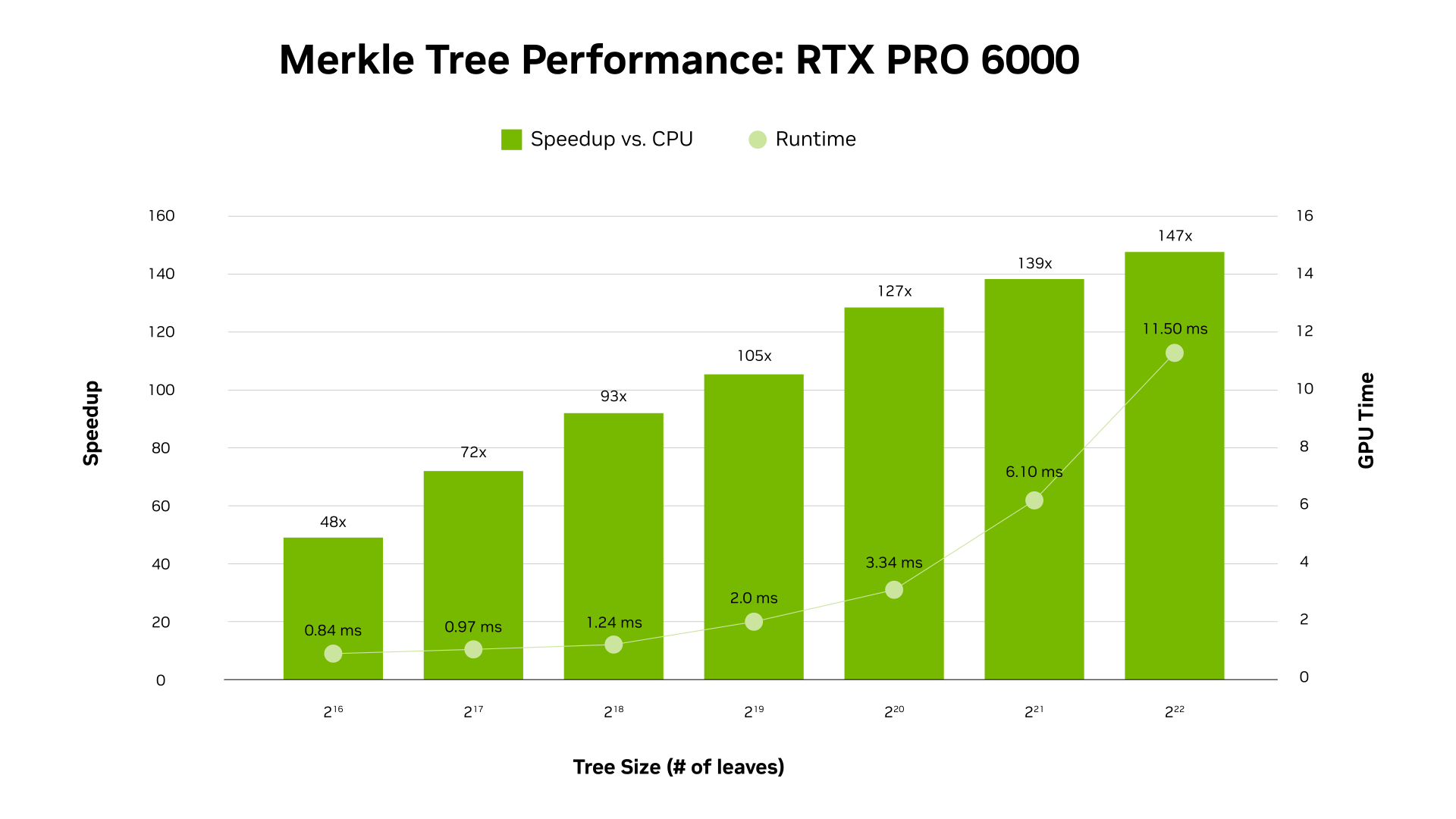
GPU-accelerated Merkle tree construction enables rapid proof generation and verification for large datasets. Parallelizing tree building drastically speeds up data integrity and authentication applications. Merkle trees are fundamental building blocks for zero-knowledge proof systems, hash-based signature schemes, and secure data verification protocols, enabling applications such as privacy-preserving authentication, verifiable computation, and confidential data verification.
Public Key
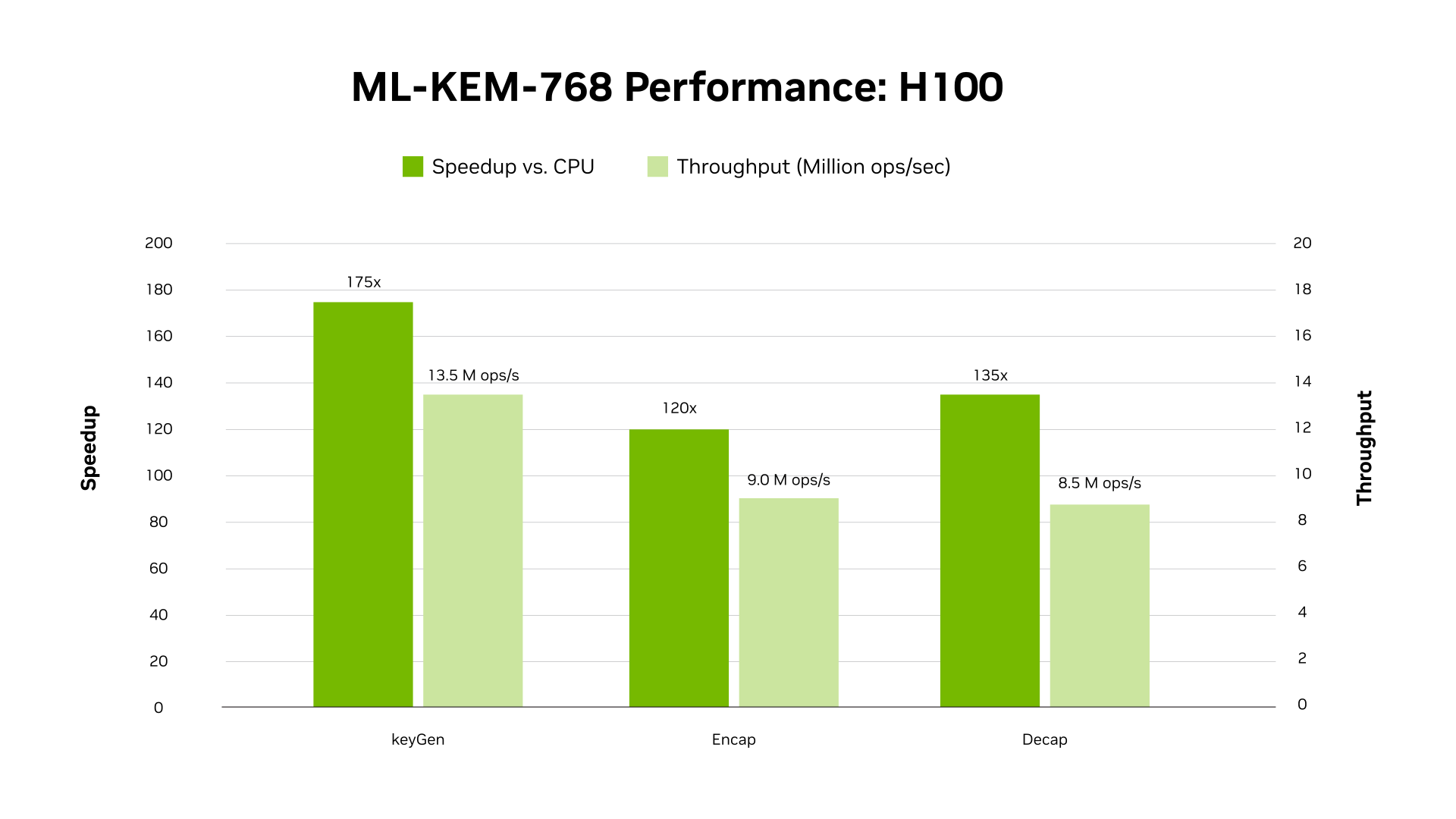
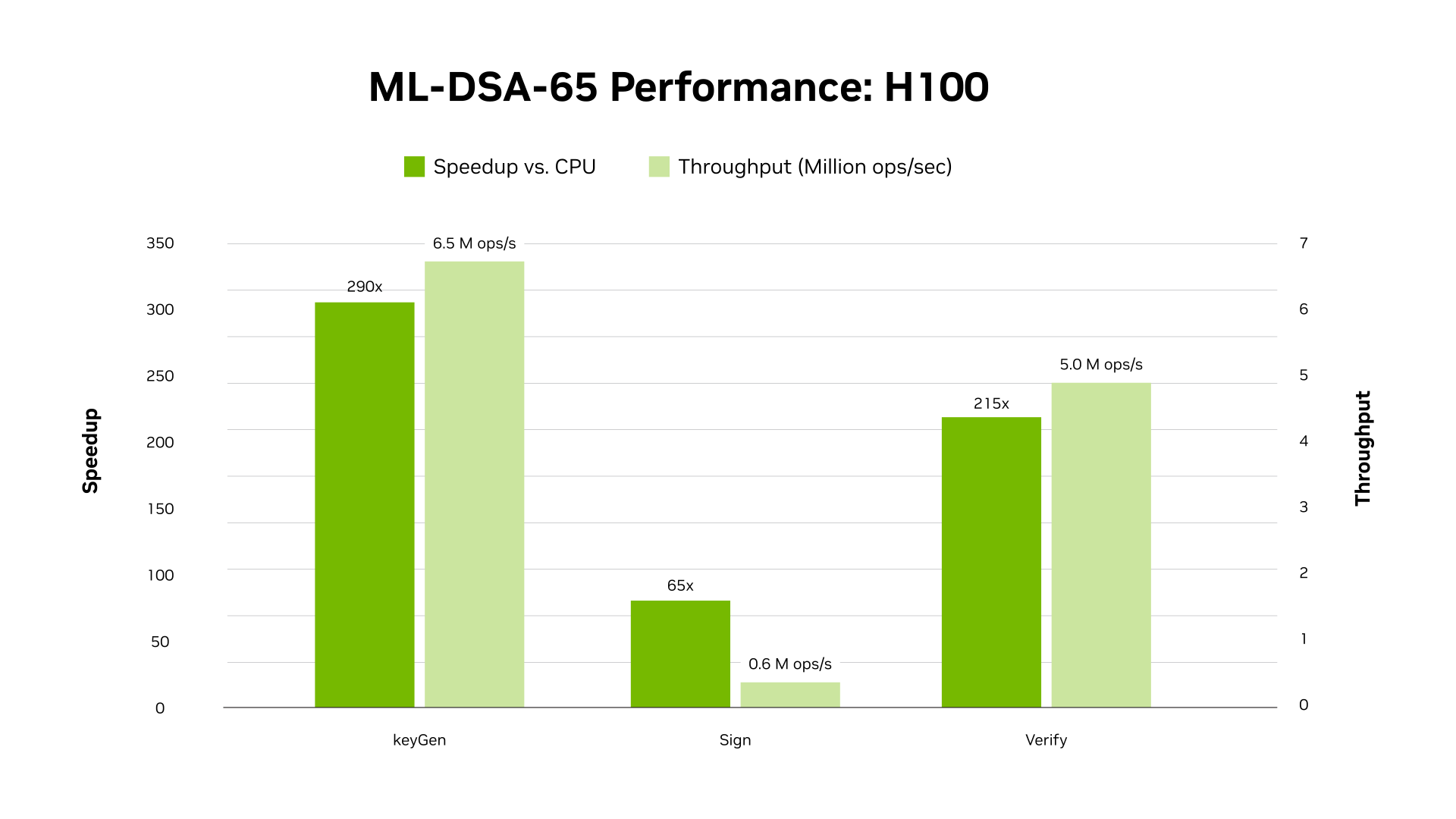
The cuPQC-PK library delivers GPU-accelerated implementations of NIST-standardized ML-KEM-512/768/1024 and ML-DSA-44/65/87 with exceptional performance across diverse workloads, from low-latency single operations to high-throughput batch processing. cuPQC-PK allows seamless deployment across any NVIDIA GPU platform, from edge devices to data center infrastructure. Ideal for TLS handshakes, VPN tunneling, code signing, certificate authorities, and encrypted communications at scale.
cuPQC-PK User Guide
Latest cuPQC Product News
NVIDIA cuPQC FAQs
Get answers to common questions about NVIDIA® cuPQC, including supported platforms, features, and applications.
NVIDIA cuPQC is a GPU-accelerated cryptographic math library SDK that gives developers the primitives to build and accelerate a broad range of cryptographic applications, spanning Post-Quantum Cryptography (PQC), Zero-Knowledge Proofs (ZKP), Fully Homomorphic Encryption (FHE), and beyond. It delivers performance levels that far exceed traditional CPU-based implementations through a composable, well-structured API, addressing the need for high-performance cryptography that is both powerful and easy to build on.
Get started with the NVIDIA cuPQC SDK.
Explore the NVIDIA cuPQC Developer Hub.
The SDK provides a modular suite of cryptographic math libraries, including cuPQC-BigInt for large integer arithmetic, cuPQC-NTT for Number Theoretic Transform operations, cuPQC-Hash for cryptographic hashing and Merkle tree operations, and cuPQC-PK for public-key cryptography operations.
Review the complete documentation in the NVIDIA cuPQC User Guide.
cuPQC utilizes link-time optimization to automatically select the best GPU kernel for your specific configuration and workload type. This allows it to handle diverse cryptographic workloads, from high-throughput batch operations to large-scale single computations, delivering order-of-magnitude performance gains compared to CPU-only baselines.
Learn more about GPU-accelerated cryptography benchmarks inside tech blogs.
Yes, cuPQC is designed for broad GPU platform support. It delivers optimized performance across a wide range of NVIDIA architectures, from NVIDIA Jetson edge devices to data center GPUs, ensuring seamless deployment in any environment.
View hardware support details in the NVIDIA cuPQC documentation.
cuPQC is built around discrete, reusable primitives that are each self-contained and composable. Because these components share a consistent API design, developers can mix and match them across different cryptographic schemes like PQC, ZKP, and FHE without learning a new interface each time. The result is less integration overhead, more code reuse, and faster development cycles.
Learn more about the NVIDIA cuPQC SDK.
cuPQC is seeing active adoption across cryptographic domains where GPU acceleration makes a tangible difference. In the ZKP space, it is being used to accelerate proof generation for zkVMs, verifiable computation, and smart contract verification, while in FHE it is enabling computation on encrypted data to become practical across privacy-preserving AI, secure cloud computing, and sensitive data workloads in healthcare and finance. For PQC, it targets high-throughput network applications such as TLS handshakes and VPN tunneling, where quantum-resistant algorithms need to perform at scale without compromising latency.
cuPQC gives researchers access to high-performance, GPU-accelerated primitives that make prototyping and experimenting with computationally expensive cryptographic schemes practical. Beyond accelerating the research cycle, it enables work that was previously difficult to pursue at scale, including building and validating new schemes, running cryptanalysis and security evaluations, and exploring security and performance tradeoffs across wide parameter sets.
Start building with the NVIDIA cuPQC SDK.
Yes, cuPQC is being adopted across the ZKP, FHE, and PQC ecosystems, with organizations including Succinct, OpenFHE, Fair Math, Lattica AI, Zama, and Open Quantum Safe (OQS) currently working on integration. As the cryptographic landscape evolves, NVIDIA continues to expand partnerships with organizations building the next generation of high-performance cryptographic applications.
You can access official documentation, user guides, download links, and developer blog posts through the official NVIDIA cuPQC developer page.
Visit the NVIDIA cuPQC Developer Hub for all resources.
Partners Adopting NVIDIA cuPQC
“cuPQC’s safe and high-performance algorithms make transitioning to post-quantum cryptography achievable for enterprises with high-throughput security applications”
- Hart Montgomery, Linux Foundation