
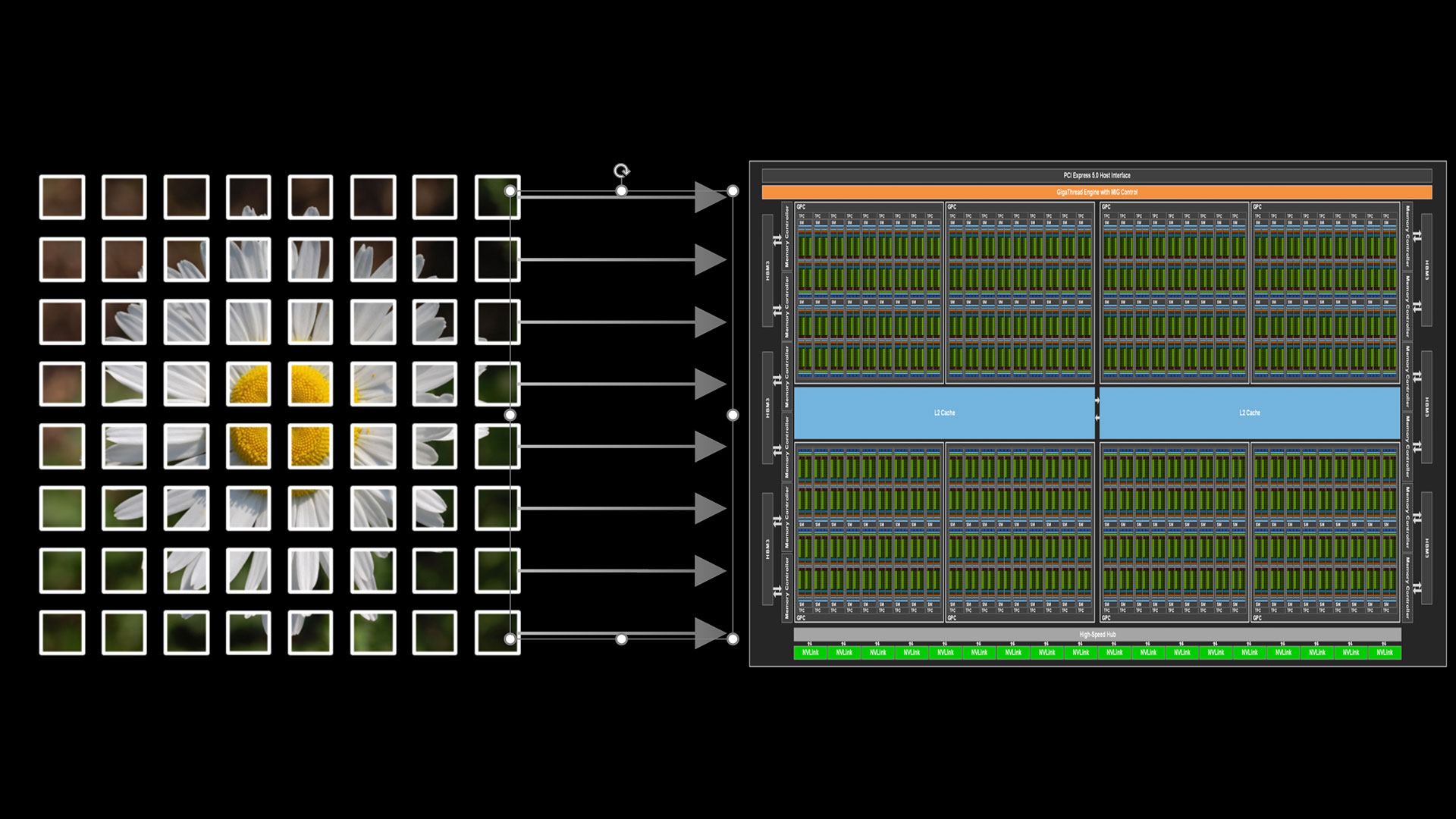
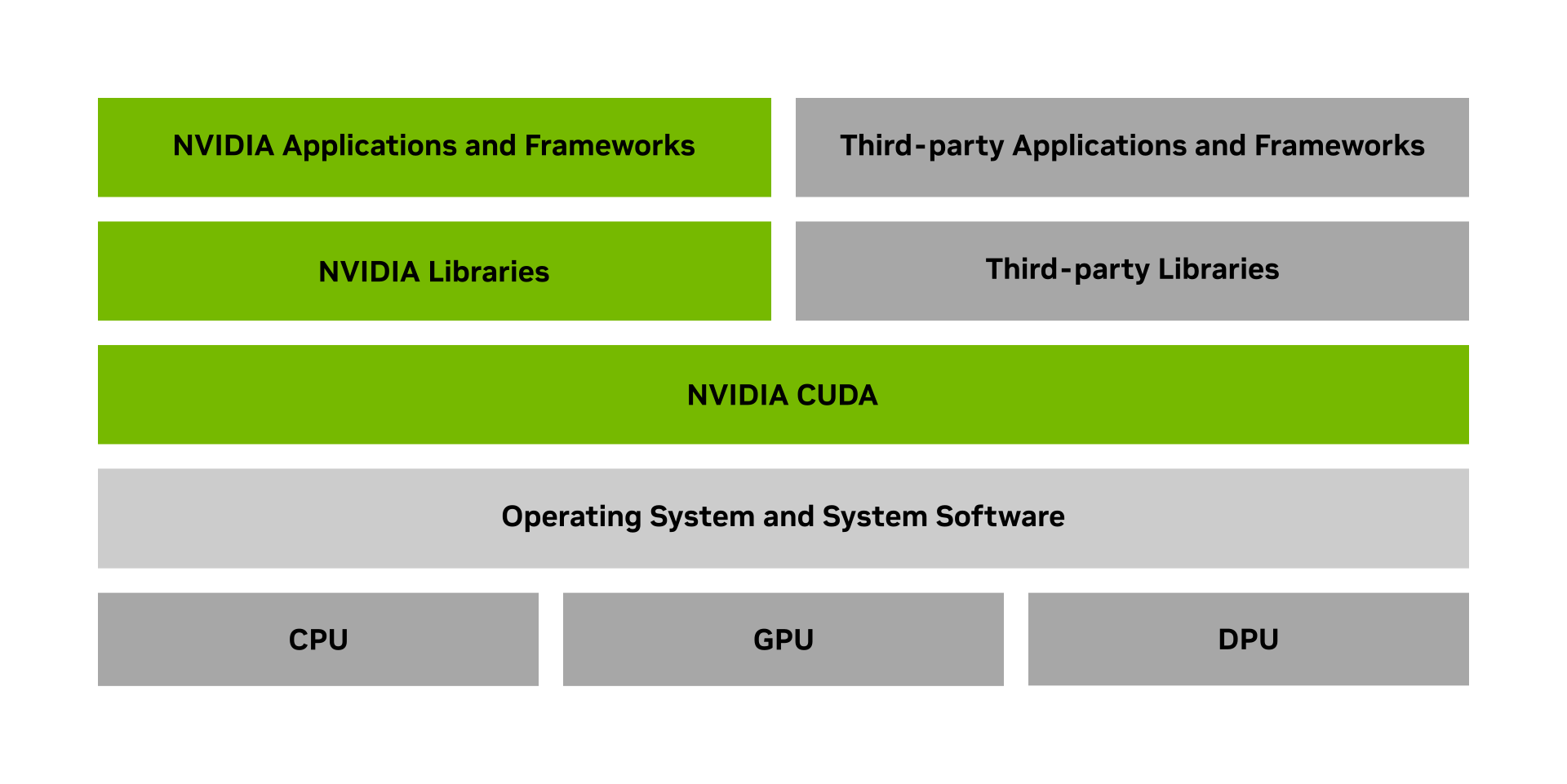
CUDA is NVIDIA’s parallel computing architecture. It enables dramatic increases in computing performance by harnessing the power of the GPU.
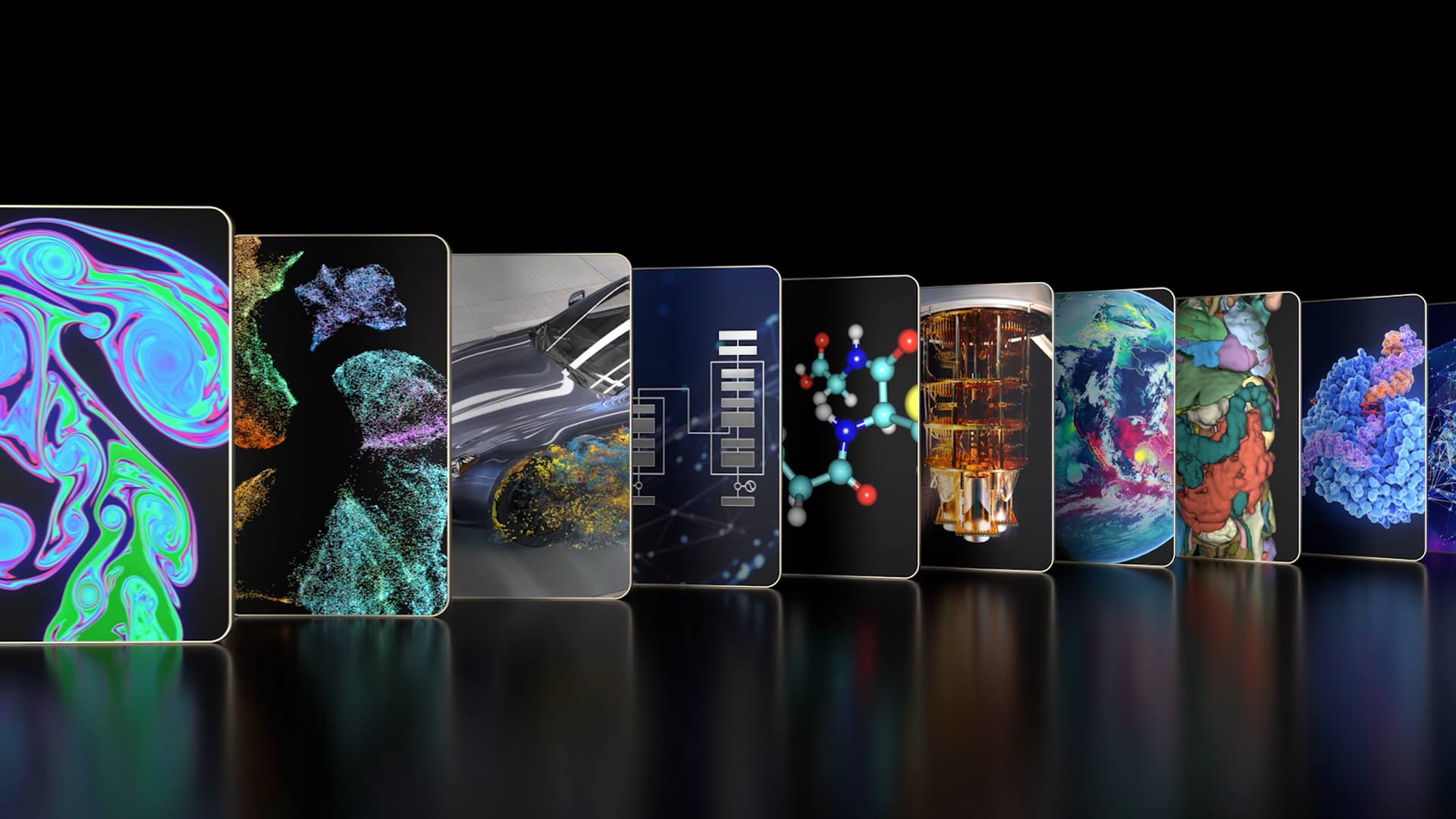
With millions of CUDA-enabled GPUs sold to date, software developers, scientists and researchers are finding broad-ranging uses for CUDA, including image and video processing, computational biology and chemistry, fluid dynamics simulation, CT image reconstruction, seismic analysis, ray tracing, and much more.
Background
Computing is evolving from "central processing" on the CPU to "co-processing" on the CPU and GPU. To enable this new computing paradigm, NVIDIA invented the CUDA parallel computing architecture that is now shipping in GeForce, ION, Quadro, and Tesla products, representing a significant installed base for application developers.
In the consumer market, nearly every major consumer video application has been, or will soon be, accelerated by CUDA, including products from Adobe, Sony , Elemental Technologies, MotionDSP and LoiLo, Inc.
CUDA has been enthusiastically received in the area of scientific research. For example, CUDA now accelerates AMBER, a molecular dynamics simulation program used by more than 60,000 researchers in academia and pharmaceutical companies worldwide to accelerate new drug discovery.
In the financial market, Numerix and CompatibL announced CUDA support for a new counterparty risk application and achieved an 18X speedup. Numerix is used by nearly 400 financial institutions.
An indicator of CUDA adoption is the ramp of the Tesla GPU for GPU computing. There are now more than many 100's GPU clusters installed around the world at Fortune 500 companies ranging from Schlumberger and Chevron in the energy sector to BNP Paribas in banking. NVIDA GPU powered supercomputers feature in most of the top 10 supercomputers in the Top500 and Green500 rankings.
GPU computing is fully supported by all major operating systems.
There are multiple ways to tap into the power of GPU Computing:
- Drop in acceleration using powerful libraries such as MATLab, CULA and others.
- Using Directives, simple hints to express parallism, such as OpenACC and PGI Accelerator
- Writing code in CUDA C/C++, CUDA Fortran, DirectCompute, and others.
Many widely adopted commercial codes have been developed to use GPU Computing, please visit our vertical solutions page to find out if the software that you use has already been ported.
Other Useful Links


Registered Developers Website
NVDeveloper (old site)